Showing posts with label Advice. Show all posts

Monday, October 6, 2014

Race & Place or Ride with Pride?

I just got back from a truly epic charity event out in San Francisco.  It's called the Canary Challenge, and the purpose is to raise money for the Canary Foundation at Stanford.  The Foundation is trying to develop a blood test for early detection of cancer.  The idea being that early detection means less extreme intervention and higher cure rates.  If you are familiar with the phrase 'canary in a coal mine', that's where their name came from.
Anyway, back to the subject of this post.  I do both races and charity events.  Some charity events are races (Susan G. Koman Race for the Cure, for example).  Most are not.  Charity cycling events are often called 'rides', while the Canary Challenge is called, well, a 'challenge'.  That's definitely due to the grueling nature of the course, which ascends 8,455 feet over 103 miles, including two climbs that last longer than 30 minutes (the second comes at mile 78, so you're just a bit tired at that point!), plus another in between them that's nearly as long (only you also have headwinds and it was raining a bit).

Anyway number 2, back to the subject of the post again.  So what am I talking about today?  I believe in the value of racing.  I also believe in the value of not racing.  What's that?  Hipocracy, you say?


Well, let's take the racing part first.  I have found that I am not pushing myself as much as I can when I run.  It's not to say I'm not tired at the end of a run, but my pacing is never what it is in a race.  When I did my first half marathon, I was injured, and my training runs were in the upper half of the 8-9 minute per mile range.  When I did the race, I was at 7'50" until mile 10 when the really steep hills hit, and I finished with an average of just over 8'.  My injuries were hurting a lot, but I was fine energy-wise and endurance-wise.  If I wasn't in pain, I would have easily been able to keep going for a while.  So, for me, getting into a race is a fantastic way to push yourself and learn more about your limits.  Was I going for a top 3 finish?  Was I trying to pass everyone?  No.  I was racing for my own goals and treated it as a personal event.  But I was being egged on by the 1,000 other runners around me, and definitely had little bouts of being more competitive and passing people when I felt the power to pick someone off. It feels great.  I also learned that I'm really good at running up hills relative to most other runners.  I never would have known that without doing this race.
I got a lot out of that race, and others I've done, mainly around what I'm actually capable of.  Setting successive PRs in 5Ks each time I do one feels great, and they're all times I never imagined whether as an overweight kid/teen, or as a fit 30-something father and husband.  Physically and competitively, it feels great.

But as great as racing is, I also see value in events that aren't races.  The Canary Challenge has a kinship across riders that made it amazing.  I was exhausted by it, and my left knee is still in bad shape from the long climbs (funny since my right knee was the problem going in, but that's been fine).  But I didn't care.  I loved it.  Really loved it.  I rode with some friends, though we weren't together too much. The time we rode together was great, and I made a point to meet up with them and visit for a bit at the aid stations, which brought an even tighter feel of community.  I started recognizing jerseys, and chatted some of the familiar ones up as we were grinding up the mountain together, or when stopped at an aid station.

Where did I place?  I have no idea - no one was tracking it.  How many riders were in my age group?  I dunno - a bunch, maybe?  Maybe not?  What was my final time and average speed?  I know both of those, but they don't matter.  What I got out of it was a grueling event that definitely worked my body, but also worked my mind and soul.

So, my point is hopefully clearer and less hypocritical-sounding.  Racing can be incredibly good for your development in whatever sport you do.  So can events that aren't races.  Do them both.  Don't lose sight of the value of either, and enlighten.your.body.

Friday, September 5, 2014

But You Don't Have The Body of A...

I hear comments like this all the time, whether from someone about themself or about others.  "Oh, but I'm not built like a runner."  "You don't have a cyclist body."  "I'm too skinny to lift weights."

The thing is, if you do it, you are it.  You have the body for it.  For example, I have a bigger build than the stereotypical runner.  But I'm a runner (notice I didn't just say, "I run," but actually said, "I'm a runner.").  And I have a build.  Hence, I have the build of a runner.

Same for cycling.  I don't look like top cyclists.  Yet, I have a body, and I'm a cyclist.  A+B=C.

This isn't to say if you do X and have a body, then you have the typical/ideal/professional body type for it.  But does that need to matter?  I'm not trying to be a world class runner.  I'm just running because it's amazing - for my body, for my mind, for the example I set for my son, etc.  Do I need to have a body like Usain Bolt or Steve Prefontaine?  Does not having their body mean I'm not a runner, can't run, or shouldn't run?  Somehow, I ran to work this morning, doing 7.5 miles, and didn't burst into flames or anything.

I am big for a cyclist.  Not huge, but big.  I'm more muscular in my upper body, carry more mass in my legs, and generally weigh about 40-50 pounds more than the elites.  Yet somehow I did 50 miles the other day at just a hair under 20 mph.  Is that elite speed?  Naw.  Is it good?  Did I feel great?  Heck yeah.  Did I burst into flames then?  Nope.

Granted, the amount of sweating I'm doing may be helping to keep me from spontaneously combusting despite lacking the archetypical body for these activities, but I think it's more than the comments people make and the sentiments underlying them are what's flawed.  Not my body (or yours, or that guy running down the street).

So, don't look at yourself in the mirror and presume you can't ___ (fill in the blank).  Look yourself in the eye, and realize that you absolutely can. Go on. Get out there, create your potential, and enlighten.your.body.

Saturday, August 16, 2014

Health Is Not a Mid Life Crisis

Today, I ran to work. I love doing that. I call running and cycling to work "CUYOP" - commute under your own power - read more in my blog post on it, and check the hashtag activity on Twitter). It's a great way to start the day because of how it can recenter your mind, give you a chance to think through a few things before the clutter of email, meetings, fires, etc get in the way. CUYOPing home is also great to clear out that bombardment before you are home with family so you can be a whole person for them.

But that's not what this post is about. It's about health and the idea that it's a mid-life crisis (by the way, if you haven't heard it, listen to Faith No More's song Midlife Crisis from their album Angel Dust). I spent today's CUYOP run thinking about this idea, and felt compelled to write out my thoughts a bit.  For me, I was an obese child and teenager who lost weight starting when I was 17.  While I was never obese again, I regained too much of it and too many unhealthy habits as I crested my 20s and passed into my early 30s.  When my wife became chronically ill, I looked at myself hard, and was very unhappy with what I had become again and what my son had as health role models in the two of us.  July 1st, 2011 marked my change.

Someone looking from the outside could say that this was some sort of mid-life crisis.  I was almost 33, so it might not have been quite at the mid-life mark, but then again, with several factors in how I was living, what I was eating, and how I was handling stress, it may well have been the mid-point of my life.  Putting that detail aside, I'm just past 3 years into this new way of living, and have no desire of turning back to my old ways. I've not tired of being healthy, and have the same drive and profound reasons behind choosing health that I did before. I got healthy for my son, for my wife, and for me. I wasn't happy, and wanted to be. My son needed a better example, and will continue to need that his entire life.  My wife needs a husband who can be there for her until the end of time - just as I vowed to be when we got married. Those aren't fleeting drivers, nor are they temporal, tied to being roughly half the age I'll be when I die.

Now, there are two more reasons why health isn't a mid-life crisis. First - and this is the MBA in me putting numbers first - is the math.  While you could feasibly argue that I was at the mid-point of my life given how things were going, you can't argue that anymore. That's point is behind me. It's not behind me beacuse I'm now over that mid-point. It's behind me because it's actually in front of me. I have complete confidence that my natural life expectancy (that is, my life expectancy without some catastropic event prematurely ending things for me) is far longer than it would be had I not made the shift. So, if I'm not at the mid-point of my life, then I can't be in the midst of a mid-life crisis.  I fully believe that I'm still pushing that end point out as my body does the amazing work it was built to do to care for and heal itself, righting many of the wrongs of earlier choices I had made. As evidence, during a recent physical for a new life insurance policy, my resting heart rate is now in the 40s. There's evidence that living things have a natural number, if you will, of total heart beats they can have in a lifetime, and the number is surprisingly similar across species. When you account for speed of heart rate, you see that fruit flies have about as many beats as humans, bears, fish, etc. So, by lowering my heart rate (and not going too low, of course), I have extended the amount of ticking my clock has left to do.

The second reason is that mid-life crises are usually fleeting. You buy a car you shouldn't buy to get in touch with your youth (though the car eventually is sold, traded or rots in the driveway). You quit your job (though you find another). You leave a relationship (but find another eventually). You go on some wild vacation (yet still return home).  See? Fleeting. Temporary. You 'return to sanity' after getting the crisis out of your system.  I'm over 3 years in, and have learned so many things about the choices I've made and the new choices I'm making that I can't go back. "Can't" is a bad word. How about "I don't want to go back." Or, "I couldn't sanely go back knowing what I know now." I don't want to eat GMO foods. I don't want to be over-exposed to pesticides. I don't want to eat processed foods and feel miserable. I don't want to sit around and do nothing active and feel tired, depressed and unhappy with my body. I don't want my back to hurt from muscle degeneration. I don't want my son to look at me and see me in anything but a positive, inspiring light, nor do I want him to look at me in a good light and follow my example when that example will result in health issues for him.

You could argue the impetus for such a change is a mid-life crisis. It wasn't for me, but I could see how it could be for some. What I would say is, let's ignore whether the impetus is fleeting, and find a lasting path of health. If it is fleeting, find one that endures (like being there for your children or loved ones - or yourself!), and stay on the path.

Like I say, people don't change, lives do. Change once, for the better, and then maintain. That's how you enlighten.your.body.

Saturday, April 5, 2014

Flawed Logic: "If I'm gonna die anyway, I might as well enjoy what I'm eating"

Tell me you haven't heard or thought this before:
If I'm going to die anyway, then I am going to eat whatever I want and enjoy the time I do have. Why would I give up XYZ and be miserable?
That, my friends, is called 'flawed logic'. It's one of the most common responses out there for eating healthy (along with "I don't have the time," "it's too expensive," and "I don't have the willpower."). Why is it flawed logic?  Simple, it ultimately presumes that the only enjoyment in life comes from food. So, if you give up your most loved foods, then your life will be miserable.

How would your significant other feel about that? Your siblings? Kids? Parents? Friends? Pets?

I don't blame those who say things like this. It's what our society programs us to think - food is not fuel to us, it's a source of enjoyment and pleasure. It tastes amazing and makes us feel good. We run (or maybe waddle) to it when we're sad or upset, just like the Golden Girls with their late night cheesecake sessions. So it's no wonder as a society we say things like this.

In reality is that food is ultimately just a fuel. Also, healthy eating can actually be tasty. And it can be done economically, both in terms of cost and time.

But the real reality is that our lives and the enjoyment we experience within them aren't just about food. We take joy from so many other things. Time with loved ones, great movies/shows/games/music/etc, vacations, our jobs (seriously, some people take real enjoyment from their work), time with our pets - and the list goes on.

Why do we think that giving up on some foods we like that literally are killing us somehow wipes out all enjoyment from our lives?

This question came to me after watching a great documentary called Fat, Sick & Nearly Dead by an Aussie named Joe Cross. It follows him over 60 days as he goes on a fresh juice-only diet, and educates you about what our food choices are doing to us, and what healthy living can do instead. It's a fantastic movie (and book), so I highly encourage you to watch it.  It's free for Amazon Prime members, and available on DVD and streaming from most services out there (Amazon, Netflix, etc), and there's also a book version (on Kindle, too). He suffers from an autoimmune disease that has him on several medications (including strong doses of steroids), and yet he's still suffering (and overweight and feeling miserable). He transforms himself, is able to come off his meds, and is happier and healthier. He enjoys his life in a way he didn't before. And he helps another man along the way with the same ailment and even worse health (who then intern helps others, too).

What Joe learns and teaches is that we need to look for all the other sources of joy in our lives beyond food, raise the value those have in our minds, and then make healthier choices to enhance our ability to take in those sources of enjoyment. What we find along the way is that we had a false notion of what our real happiness comes from or, more accurately, just how happy we thought we were.

Whether you want to be as extreme as Joe (and you can't help but feel like you want to be), the message is so clear and valid. Live healthier, get to a place of true enjoyment, and enlighten.your.body.

Wednesday, January 22, 2014

Lessons from my 1st Interview

So I recently got to interview a very inspirational guy, Dai Manuel, for my podcast and YouTube channel. It was a great experience with some really awesome discussion - no surprise given my subject.  In addition to all the great content, I learned a ton since this was my first web-based interview, so I thought I'd share what I've learned.

the setup
I used Skype to do the interview, and a piece of software called "Call Recorder for Skype" from ecamm Networks that lets me record the video chat and split the two halves into their own movie files. It's a very cool feature.  This allowed me to let each side of the conversation be focused on, rather than having the screen split. It also allowed me to be off camera while Dai was talking so I didn't have to worry about how I looked.  I don't mean whether I looked good or not, but if I had to move out of the shot for some logistical reason or something like that. It just allows the viewer to focus on the speaker more than a distracting side image.

I used a 13" Retina MacBook Pro with a Core i7 processor, 16GB of RAM and 1TB SSD, and for audio, I used the built in mic and speakers.  I was connected over WiFi, but would have preferred a hard wire. I had also run an extension chord and power strip to be sure I wasn't on battery power.  Stupidly, I turned the power strip off about 10 minutes before the call without thinking as I'm big on saving electricity.  That strip also powers my treadmill, but was off, so I figured, "Hey, let's save the planet." It's a habit. See how it may have mattered in the quality section.

Dai was on his iPhone, and had the Apple headset plugged in for his audio.

I also had my Canon Vixia camera running on the side, focused on the screen as a backup just in case.

quality
Having shut off the power to my laptop, the processing power was throttled back. This ended up mattering in how well the recording was keeping up with the video chat (mainly the frame rate). If you watch the video, you'll see some periods where there's jagged movement.  The call also dropped twice, which could have been my WiFi, the load on my computer from doing an HD recording.

Audio was interesting. Dai's voice was very loud because he was using a headset, while mine was pretty soft.  I had to adjust the audio tracks for both of us to compensate for this. Also, because I was using my built in speakers and mic, my audio track included a low-fidelity capture of Dai's voice (what my mic picked up through my speakers). As much as I don't want to use a headset, I will think about it strongly next time to avoid this. It wasn't a huge problem overall, but there are moments where we're talking simultaneously, or where the way I've edited things makes it awkward (he says something, then I pull my video/audio in to ask the next question, and you hear the end of something you just heard him saying).  An alternative would be to use a dedicated mic, and shield it a bit so it picks up less audio from my computer.

I do think the audio from the headset - while certainly loud enough - was not as clear as I'd like. It could just be the Skype connection, but I'm guessing it was also the headset itself. It's an OK mic, but not amazing.

running the show
I didn't establish rules for the interview. That is, I didn't act as a director. Dai had a lot of great things to share, and I didn't want to cut him off. I had sent him the questions just before the interview, so he was naturally covering the material I was hoping to get into.  I didn't realize it at the time, but this lead to really long cuts of Dai talking, and less of an interview.  I'm overall fine with this as I think the material is great, but it taught me a lesson for next time in case the material isn't flowing as well or the interview is going way off topic - I should have established a gesture or something to insert myself so I could keep the interview to my intended topics and questions.

I lucked out here, and think the others I've reached out to for interviews will also be fine, but as I say many times, luck is not a strategy.

split personalities
The split video files were really cool, and I definitely liked this approach better for such a long interview (31 minutes) than having both of us sharing the screen. With the audio issue I mentioned above, I don't think it would have worked to have it all simultaneous since everything Dai said would come with the version my mic picked up layered over it. While you don't have to split the video (you get a combined file, and then have drag-and-drop filters you plop the file on to create the split versions), you have to say you want this upfront as the output file is different (it's essentially a 32:9 file made of two 16:9 images side by side versus creating a single 16:9 image that's split between an 8:9 of me and 8:9 of Dai). That means I couldn't really opt to go back to a side by side. So I was committed to it.

Luckily, ecamm built in a droplet to split out audio sides separately from video sides (you can get both together, or separately).  There are times when I wanted to clean up the audio tracks a bit, and needed them separated from the video.  These filters alone made Call Recorder worth the price (it was $29.99).

The downside to this approach is that I ended up with lots of back and forth between us. I could just cut back and forth, but it felt too choppy, so I used transitions. Every time I use a transition, I'm reminded of a Simpsons episode where Homer makes a dating video of Ned Flanders using a kid's video editing board Lisa has.  He uses a star-wipe effect between each cut scene, and Lisa warns him that it's too much.  He pushes back, insisting you can never have too much star wiping.  Lisa was right, but the video is hilarious.  Anyway, that always makes me concerned I've overdone it with the jazzy transitions.  I scaled back to really simple fades most of the time as the novelty wore off and I ended up almost feeling nauseous from all the cubed-wiping and card flipping going on as Dai and I went back and forth.

editing takes time...lots of time
I spent two days editing the 31 minute final product. Part of that was time I lost because of a computer problem, but a lot of it was nitpicking trimming clips, aligning audio, and trying to get nearly 50 minutes of content down without losing the point. I honestly wouldn't have cut anything, but it was too long for most viewers. So if I was going to cut, it had to be well done and the essence of everything Dai was saying had to be intact.

in the end...
I think the content is what made the interview solid. Dai's an amazing guy, and really gave of himself in a very real way in the interview, and you can't help but be inspired coming out of it.  I was inspired myself by his words, and also by what I'd do differently next time.  In summary:

  • make sure my laptop is plugged in, and all other programs are quit
  • establish rules of engagement so I can be the director and get the interview I'm looking for
  • find a better way to capture audio on both ends (in case the next person uses a setup like I had), or ensure we don't talk over each other
  • make sure I have solid editing time blocked out
  • make sure your interviewee is willing to help promote the video and earn the right to check in to make sure they do


I had a great time doing the interview, and really enjoyed watching the finished product with my wife. Creating inspiring content for others is another way to enlighten.your.body.

Sunday, January 19, 2014

Podcast Episode 006 - Q&A: how do I make sense of all the conflicting advice?

there are so many people and companies out there telling you to do something to lose weight - and plenty of others insisting you never do that. eat meat. don't eat any meat. drink lots of water. don't drink anything. live on fruit. don't eat fruit. we help you figure out how to process all this conflicting advice to find a path forward for you to enlighten.your.body.


If you enjoyed this video, subscribe on YouTube or get the podcast on iTunes and spread the word. It's one more tool I'm giving you to help you enlighten.your.body.

Podcast Episode 003 - I get bored at the gym, what should I do?

building from episode 2 on motivation, we dig into finding exercises you actually enjoy so you don't find yourself bored when working out or procrastinating to avoid something you don't enjoy.

this episode is tied to a blog post I did called "Q: how do I stick with it? (Part II)".


If you enjoyed this video, subscribe on YouTube or get the podcast on iTunes and spread the word. It's one more tool I'm giving you to help you enlighten.your.body.

Podcast Episode 002 - Q&A: How Do I Stay Motived

what motivates you to be healthy or to workout? is it something external to you that's fleeting, like trying to lose weight for a school reunion, wedding or beach season? this episodes talks about finding a lasting and profoundly personal motivation within you that endures to drive you to be healthier.

this is the video that ties to a blog post I did called "Q: How do I stick with it? How do I do what I know I should, but just don't do? (Part I)".


If you enjoyed this video, subscribe on YouTube or get the podcast on iTunes and spread the word. It's one more tool I'm giving you to help you enlighten.your.body.

Tuesday, January 7, 2014

R&R - Rewards & Rejuvenation

I was recently reading an issue of Bicycling magazine (the last free issue I got for buying my Trek, alas), and it had a great piece on 7 people (5 individuals and one couple) who lost weight on their bikes that used rewards as an incentive to stay in it and get even more of a rise from reaching their goals. This is something I've believed in, and seen work for several people around me. I want to take the idea one step beyond this and misuse the abbreviation R&R to get there. Instead of R&R standing for 'rest & relaxation', I want to take a more active interpretation, and call is 'rewards & rejuvenation'.

Be sure to see my YouTube videos on r&r (part 1 and part 2).

rewards
Rewards is what the magazine was talking about. The individuals in the story did something really nice for themselves when they reached their goals (most bought new bikes, but some went on a big 'ridecation' to a destination they always wanted to go, which is a great idea). In addition to giving yourself a big reward for hitting your ultimate goal, you should tie this into the idea I discuss in my 10 principles around setting goals, both near and far.  You can have your ultimate goal - say losing 50 pounds - but you should have a series of intermediate goals to keep you going along the way. You could have five 10 pound goals, for example. Or, if you're running, the example I always give is not thinking about the total goal distance, but pick a spot a bit out in the distance, like a street sign or building, run to it, and then pick another.  Ultimately, you get to the big goal, but you do it in manageable pieces rather than staring at this big, daunting goal that seems too far off and out of reach, which can discourage many people to the point of giving up.

So as you hit those mile post goals - whatever they may be - give yourself something to celebrate. One person in the article had road races as her intermediate goals, and she bought herself an official jersey at each one as her reward for finishing (for those who don't know, these can range from $75-200, so it's no small thing).  I love that idea.  She bought a new bike when she had completed the races and hit her goal weight.

A concern you may have is that this can cost a lot of money. True, but what are you doing today that costs you that also keeps you from your goals?  Is there a food or bad habit you need to give up to get there? Does that come with a price? As part of the clean14 challenge, I'm giving up coffee and soda. I can easily see what those two things cost me a week - at least $20 a week, or $1,000+ per year.  Wow.  One of the people in the article quit smoking, and set aside the money from cigarettes to buy a really nice bike when he made it to the end while buying some gear and equipment along the way as his interim rewards.  Brilliant.  As he put it, he was spending the same amount of money, but it was to save his life rather than end it this time.  Even more brilliant.

The one thing to be mindful of is not to use food as a reward. That reinforces the wrong habits. Pick something tied to what you're trying to achieve. A good friend bought himself a custom pair of NikeID shoes when he had run a milestone distance (he hated them, incidentally). So if you're trying to lose weight, don't reward yourself with a cheesecake, ok?

rejuvenation
This part is easy to confuse with rewards, but that just depends on what you choose.  Along the path to reaching our goals and changing our lives, we can get tired. We can get injured. We can get discouraged. Be mindful of this, and find little ways to reset yourself when you need it. A fresh hair cut, a spa day, a weekend away, a ball game or any other way to stop, reset, have fun and release a bit. I'm particularly fond of hair changes as they can make you feel new and different, which can really help you reset when you need it most. I tend to shave my head every now and then. My wife makes fun of me for saying it's cathartic, but it is in a way. It's a sort of symbolic cleaning and restarting.  A massage can be, as well, as can a good session in a sauna or steam room.

Whatever it is, don't forget to give yourself a clean start from time to time.

So you reward yourself as you win your way to your ultimate goal, and keep yourself fresh and rejuvenated by being mindful of your need for this along the way as you enlighten.your.body.

Wednesday, January 1, 2014

Eat Your Kids Scraps - Just Make Them The Right Scraps

You hear a lot from parents of toddlers about how they put on a bunch of weight eating their kids leftovers. Parents, you know the drill, you give your kids chicken nuggets, mac and cheese, peanut butter and jelly, etc, they eat some of it (hopefully enough to fuel their little bodies), and then have scraps to throw out. Invariably, you eat the scraps rather than tossing them.

I was guilty of this.  It adds pounds to parents, for sure.

So I cut that out. It helped.

But I realized that I've been eating my son's scraps again. And it's not resulting in weight gain. Why? The issue wasn't the scraps. It's what the scraps were made of. You have to get to the root cause of the issue. If you are feeding your kids processed foods, eating those scraps will be other than good for you, to put it nicely. But why not realize that these foods aren't good for them, either?

Last night, I had peas, carrots and chicken from my son's plate. They were all tasty and totally good for me. More importantly, they were good for him.

So, yeah, cutting out scraps of not-great-for-you food is a good idea, but cutting the not-great-for-your-kids food in the first place is the best idea. Set the right example and provide the right things for their growing, little bodies. To start, enlighten.your.body,

Friday, December 27, 2013

2013 - A good, fast year

I thought the timing was right to do a little reminiscing on 2013. This was a big year for me after 2012, which started great, but quickly was defined by two injuries and two related surgeries.

2013 was a year of several firsts

It was also a year of PRs
  • Fasted 5K
  • Longest run
  • Longest ride
  • Most miles run in a week and month
  • Most consistent runs
As in most years past, I also had several unfortunate side-linings just when I was starting to really hit my stride (literally and figuratively). I'm currently off from running due to a tendon issue in my left foot that started in September as I ramped up my mileage for my half marathon, but I also dealt with Achilles pain, quad strains, knee pain, etc, etc, etc.  The thing about this year is that I generally haven't let that stop me.  Why? 2013 is also the year that I really feel my repertoire (or arsenal, depending how aggressively you want to look at it) was really well-developed and in a place where I could deal with injuries and keep going. I learned a lot in getting my certification (and the Corrective Exercise Specialist credentials I'm working on now), but I also learned a lot about and with my own body first hand, and just understand things better - like it all sort of clicked.  I've been a regular at my physical therapist's office and have learned a lot there, but I view that as completely beneficial rather than something I have to do because of an injury.

A big reason why the physical has all fell into place despite injuries along the way is that 2013 was a big year for the mental side of my development. I've always stressed how you must bring your mind along with your body for health to truly take hold and stick in your life. I've read some fantastic books (probably the most impactful being "Choose to be Happy" by Wayne Froggat). I also made a point of reading some enjoyable books (Scott Jurek's "Eat & Run" was a favorite), and some that crossed both (Jay Dicchary's "Anatomy for Runners" is an absolute must read).

I've had lots of personal wins and personal losses, professional wins and losses, and physical wins and losses. As do we all. The balance is in the right place, and I found myself having an active hand in creating that balance by investing in myself. That's what I mean by enlighten.your.body. It's an active thing you do for yourself. It doesn't happen to you (or I'd have said, "get.your.body.enlightened" or something passive like that).

Look back on your 2013. How'd you do? What will you shift in 2014 to bring the right balance to your world?  How will you take an active stance on your health, happiness and life overall to enlighten.your.body?

Q: How do I stick with it (Part II)

Q: How do I stick with doing what I know I should? I am pretty good about exercise, but I eat things I know I shouldn't. I just have to make myself do it, right?

A: I talked about motivation in the first part of my response to this question. You should read that post, but the essence is about finding a driver within you so that you aren't making yourself do anything, but wanting to do something for your health (eating right, exercising, etc).

In this part, I want to address the 'something'. Let's look at exercise first. Some people have this idea that you have to go to a gym, feel awkward, get super sweating, wear cheap flip flops in the shower, and rush off to work late and sweating all over again. You have to sit (literally or figuratively) on a machine, staring at a wall, mirror, magazine or small TV screen.  You have to do it for at least 60 minutes or you won't lose any weight.

Does this sound enticing to you?  No, I'm sure it sounds more demoralizing to you than enticing.  As a work out addict, that doesn't appeal to me at all.  If it doesn't appeal, you will dread it.  If you dread it, you will have to make yourself do it, and that's exactly what we're trying to avoid.

So how do you do it? You need to find what you enjoy doing, and do that.
I had to stop during a CUYOP run to get
this photo of the great scenery I get to run in

OK, that's too simple, right?  Well, not really.  For me, I learned that I prefer outdoor exercise, so I took up cycling and running. I use machines in doors when weather really keeps me off the roads, but I combined those two things with my commute to balance my time (check out my post on CUYOP, and the Twitter hashtag #cuyop), get some varied scenery (I have a few routes I can take, including a nice riverfront section), and found that when I have an actual goal, I enjoy it more (i.e. getting to my office vs. just running a loop around my home).  So I found exercises I generally enjoy more than others, and found modalities for doing those exercises that I prefer.

I also have gym exercises I prefer, so I try to do those more than those I don't prefer or care for (I'll run on a treadmill, but find it really mind-numbing, same for upright bikes though oddly not for recumbent bikes).  Then the question is how do you do them and for how long. I recently had a long discussion with a client who couldn't get past the idea that she needed to do at least 60 minutes of cardio to make it worth anything. That's just not so. The key is not to do things at a constant pace.  Use intervals on a machine where every so often, it makes you go faster or deal with more resistance.  Pick an undulating hill course (on a machine or in real life).  Use intervals out on the road by going faster for a minute, and then slower for a minute in a pattern throughout your run/walk/ride/rollerskate/XC skiing/etc.  The run/walk approach is a great way to get into running and build your cardio-respiratory ability while not over-taxing your system. You can use a stop watch set to signal each minute, or better yet, download any of the great, free interval apps for your smart phone (I use Seconds for iOS).

Scientifically, intervals work better than constant work as the up and down in effort sparks a fat burning response that can last for hours after your workout.  As a result, you don't need to do it as long for the same result as if you did a constant effort workout.  The key is to not just choose an interval workout, but actually do it.  By that I mean when the interval hits, move faster. It's pretty easy to get lost in your reading or a show and ignore the machine telling you to pump it (or miss the point where you were supposed to start running again if you're out on the road).

Unscientifically, the variation keeps it interesting, and keeps you engaged (since you have to pay attention to when the interval hits, and you'll want to pay attention to when its done so you can slow down).  I started using a second interval program on my elliptical to spice things up, so I split my workout between the base interval program and a Speed Work program I found that really kicks my butt and is super fun.

I was recently participating in a month-long competition that included doing 100 burpees a day. Burpees are a mix of a squat thrust and a jump (unless you do the cross fit version, which substitutes the squat thrust with laying down on the floor).  They're great, and terrible, too.  I found that I really dreaded them, and would procrastinate starting, which just ate into the rest of my workout time. Due to an injury, I had to stop doing them before the competition ended, but I also realized I should have dropped them from my routine because of how I felt about doing them and the cost that feeling was having on my workout overall.

The same exact story applies to healthy eating. Kale is the greatest food in the world and the only thing you should eat according to some fanatics. What if you absolutely hate it? Well, then, forcing yourself to just eat kale will be a recipe for not sticking with healthy eating. Find healthy things you love (and I'm not talking about packaged foods that advertise low fat or low sodium, but actual food that was alive at some point (whether veggie or animal or both is up to you). If you hate chicken but want to avoid red meat, experiment with turkey, seafood or veggie-based meat alternatives to keep your protein up. If you don't like leafy greens, try baby broccoli, which is a hybrid of kale and broccoli.  Try some foreign veggies like baby bok choi (aka youcsai) or daikon. Open up those spices you haven't been using to give your dishes a kick. Check out some of my recipes for inspiration, or look at Twitter for healthy cooking ideas - it's LOADED with them.

So, find your true motivation, and then find the things you enjoy doing. Just find how to transform your life into one you choose to really live healthily and fully. That's how you enlighten.your.body.

Wednesday, November 27, 2013

Q: How do I stick with it? How do I do what I know I should, but just don't do? (Part I)

Q: How do I stick with doing what I know I should? I am pretty good about exercise, but I eat things I know I shouldn't. I just have to make myself do it, right?

A: It isn't about making yourself do anything, or it won't last. You have to find a way to do it without having to force yourself with tools like discipline and will power. Forcing yourself means you view it as a chore. If you view it as a chore, it won't last.  The key is finding your real motivation.

Discipline and will power mean you have to make yourself do it. I'm talking about finding something bigger that drives you so you aren't forcing yourself, but rather you want to do it and enjoy doing it. 'Enjoying' and 'wanting' may sound foreign in the context of eating right and exercising, but that's the point.

For me, it was a culmination of things that hit a couple of years ago when my wife got sick and I realized I had put on much of the weight I had lost when I was younger and basically felt miserable physically and about myself. Our young son was watching all of this. That isn't what a child should see as health role models. It literally flipped a switch in my head and drove me in a way I hadn't been driven before, not even when I lost 65 pounds when I was 17.
Now I do it because I genuinely love it and don't like not doing it. I don't have to push myself. I see myself in a totally different way, and fitness isn't something I have to do, but something I want to do and is intrinsically tied to who I am. Before, the best way to describe it was a chore.
No one wants to do chores.
The same goes for eating right, which is where many people would benefit from focusing. While there are probably a few key things you can change in your diet that will have dramatic effects, if you don't find that thing that makes you want to do it, you'll fall off the wagon when temptation arises.
What will motivate you to come at it differently? That's a question you can only answer for yourself. I can help you do that, but ultimately, it has to come from you to really shift things. Figure it out, and you will enlighten.your.body.

Friday, October 25, 2013

Preflections on a milestone I'm heading toward

In less than 48 hours from now, I will have finished my first half marathon. I say 'less than 48' because that means I will have done so in under 2 hours, which has been my backup goal time.  My original goal was sub-1:45, but I've been plagued by various tendonitis issues and a deep pain in my left femoral head.  While most of it has resolved, I'm left with one remaining injury and an insufficient amount of training.  The question is whether it's truly insufficient in the grand scheme of things, or just relative to what you're supposed to do for such a race.  I've not yet run longer than 9 miles in one go, which is really the only piece of it that concerns me beyond whether any injury flairs up enough for me not to even be able to walk to the finish (I could walk the course and still get in before the cutoff, but not likely if my remaining injury is really bad).

Stepping back from the cloud of injury and what it has meant for my training, I'm able to look at what I'm about to do, and feel a growing sense of pride.  I call this post a 'preflection' because it's like I'm reflecting on what I'm about to do rather than what I've just done. I'm using this as a chance to center my mind on the goal, on the idea that any time will be a PR since I've not yet covered this distance, and even if I have, I've never done it in an official race.

Preflecting allows me to see that, and also to ignore the deviation I've had to take from the prescribed training path, or the notion that you have to at least have run X miles before doing a half.  I know that my cardio-respiratory abilities are sufficient to get through the race.  I know that my muscular endurance is sufficient.  The only true variable is my mindset, and I know that is something that can be controlled.  I've seen it first hand, whether climbing multiple mountains back to back despite a major fear of heights (and horrible weather), or going from doing a 100K bike ride to it being a surprise 183K and feeling perfectly fine the next day (save for numbness from sitting on a bike saddle for 6 hours).

I have it in me. Nothing else matters, nor should I let anything else matter.  I will be PRing. I will have a finisher's medal. And, most importantly, I will feel amazing.  I will enlighten.my.body. Now it's up to you to enlighten.your.body.

Friday, October 18, 2013

Another Year Older, Still The Healthiest I've Ever Been

On the eve of another birthday, it's a great time to reflect on my life and where I am with the preservation of it - that is, my health.  I made a complete transformation of my life in the summer of 2011, and have been able to say at each birthday since then that I'm in the best health of my life.  This is the third time in a row I can do that, and that is something I'm feeling incredibly proud and empowered by.

I'm healthier than I've ever been in terms of my body composition, cardio-respiratory ability, muscular performance, cholesterol, etc.

Each year that I've been able to say this, I've had a voice inside saying something to the effect of, "Enjoy it while it lasts, because you will crest and regress sometime in the near future." That voice assumes that, as I age, I won't be able to stay as healthy. Joints will break down, skin, arteries and muscle will lose their elasticity, and my heart and lungs will naturally reduce their capacity as the tissue ages and tires. It's what aging is all about.

That may be true, but that doesn't mean it is going to be the case anytime soon. More importantly, it doesn't mean I need to act like it will be the case anytime soon.

To me, it's the mindset that drives being healthy. If I give in to the notion that I'm too old to be healthier than I've ever been, I will start to make choices - consciously or subconsciously - that make that presumption a reality. I may cut myself some slack in a workout. I may not try as hard with my food choices because, hey, what's the point since I'm old and can't change that?

No. That's not how I plan to age. I've worked too hard and enjoyed the process and fruits of my labor too much to write my abilities off due to my need to select an older age bracket when filling out surveys. Yes, I am moving into another standard marketing demographic as of 2am tonight. Unfortunately, I am not moving into another age bracket for running, which is a shame since I have my first half marathon in about a week, am dealing with several tendonitis injuries, and could really use a lower bar to place against! (I'm kidding around - my wife doesn't think anyone will get that I'm joking, so I best be clear - I'm not really worried about where I place.)

I was talking with a friend/fellow-health-nut about how I've gotten into all these activities after my supposed physical prime, and she was saying that many of the top triathletes are in their late 30s. Sure enough, I know a couple, and their age averages out to 40. They're also in better shape than pretty much anyone I know. They chose to keep progressing on the path of health, with each year serving not to work against their health but to be another year they get to work on their health and build it to the next level.

I will age with the idea that I'm an athlete. I'm a healthy person making healthy choices in every aspect of my life.  Do you know what will come of that approach? It will be my reality because the approach will set the actions that deliver on being healthier than I've ever been.

For me, I'm framing myself as healthy and being on a quest of continued health. What about you? How do you look at your age, your aging, and your health? Are you giving into the little voice telling you it's not in your power to become healthier as you age, or are you going to enlighten.your.body?

Saturday, September 14, 2013

Q: What is newbodi.es About? A: Whole Fitness.

Q: What is newbodi.es about? Are you about personal training? Life coaching? Diet ideas? Energy bars? What?

A: Simple, we're about whole fitness.

OK, maybe it's not quite that simple, or maybe that doesn't actually explain things.  By 'whole fitness', I mean that we are about being healthy in every way, shape and form.  newbodi.es aim is to help people transform their complete life into a higher level of health. This means focusing on the body (exercise and dietary habits), but going beyond that into the mind and how we live our lives.

So, yes, we are about personal training. We are about life coaching. We do give diet advice and guidance, and do offer 'energy' bars (if you can call them that - they're really nutrition bars). But the key is what we do to offer these things in an intertwined, holistic manner.

You can be physically fit, and still overall 'unhealthy' because you are overwhelmed by stress, pessimism and anxiety. That is not living healthily. That is living under a cloud (at best). The flip side of this is that you can be mentally very healthy and happy, but your body isn't at the same place, so you live a limited life (either by what your body can't do, how hard it is to do what you want, or quite literally that your life is limited in how long it is due to health factors). That physical health cannot just come from exercise or food choices alone, but rather the combination of the two. Improve the machine while giving it the right fuel for its needs and eliminating the poisons that work against it.

Focusing on any one aspect of health will only provide a local maxima. This is like being in a valley between two hills, and seeing those hills as the highest points around. You can pick which of the two is tallest, and think that's the highest point you can achieve. But if you change your perspective, get out of the valley and see all the peaks around you, then you can find the global maxima. Only then can you achieve it.  Fitness is a valley.  Diet is a valley. Working on your mind is a valley.  Rise above and see across all of them to find the true summit. Climbing that summit is how you enlighten.your.body.

Monday, September 2, 2013

Getting Jiggly with It (aka Proprioceptively Enriched Environments)

Proprioception. What is it? A pill that is meant to help with baldness? No, that's Propecia. Sweating? Nope - perspiration. It's about instability, and your body's ability to stay balanced by sensing what it needs to do in response to the instability and then doing it.

The definition of it from the National Academy of Sports Medicine (of which I'm a Certified Personal Trainer) is:
The cumulative sensory input to the central nervous system from all mechanoreceptors that sense body position and limb movements.
See? Just like I said. It's your body's ability to deal with the undulations under foot (or other body part that's responsible for balance or movement).  An extreme but clear example would be walking on a tight rope or a slack line. A simpler example would be running on something other than a paved surface like sand or a trail.

Creating a proprioceptive rich environment to workout in is a way to increase the difficulty of an exercise. If you don't increase the difficulty or intensity, you won't keep progressing, so this is a good thing to know as you master an exercise at a given level of difficulty. Most people think, "I need to add a few minutes/miles/pounds to my exercise," to make it tougher, but here's another way to keep getting results from your efforts.

It's not about 'more', but rather 'many'. By that I mean it isn't about doing the same exercise with more weight, moving farther or being more powerful in your movement.  Rather, it's about how many things you're asking of your body in the process of the movement. So with a squat, it isn't that you're now wearing a weight vest, holding dumb bells, going down deeper or explosively charging back up. It's about activating all the muscles from your core to your toes to help keep you balanced, and asking your prime movers (quads, hamstrings) to activate more broadly and more finitely at the same time (triggering more of the muscle, and using each fiber more acutely).  There's nothing wrong with 'more', but 'many' can do more for you depending on your current fitness level and goals. It's also more likely to give you usable benefits for everyday life.

Combine more and many, and you're in a great position, but you have to work up to that. But that's the whole point of making progress. Work up to many, more and better. That's what it means to enlighten.your.body.

Sunday, September 1, 2013

Review: Mizuno Wave Evo Cursoris Has a Weird Name But Rocks

The buildup
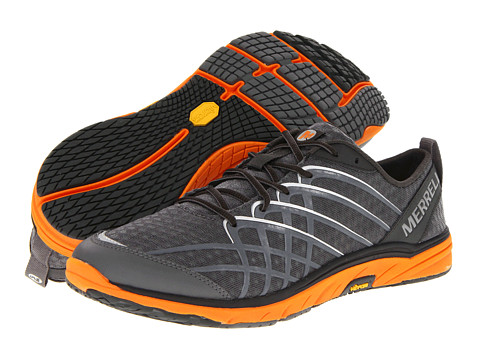
I have been searching for the perfect shoe for me for a while. I thought I had it in the Adidas adipure Gazelle. They are amazing, and I love them, but they wear out way too fast for me, and I end up feeling like I'm running off the edge of them because of how badly the upper has stretched (within 50 miles, no less!).  I thought I had them in the Merrell Bare Access 2. They're great, but I found the sole to be a bit stiff, causing forefoot pain when toe striking, and the form is a little too rigid, allowing for some slop in the toe box. They are really good shoes, though, but not perfect.

I've been seeing things about the Mizuno Wave Evo Cursoris, and waiting for RunBlogger to review them because Pete and I seem to have similar preferences in shoes.  He finally did, and I didn't hesitate to pick up a pair (on closeout for the Halloween color version from RunningWarehouse.com - great deal).

All I can say is that I'm done. The search is over. I think. Read on to understand.

What it is & How it works
The Wave Evo Cursoris is one of two shoes Mizuno came out with this year to feature truly anatomical design and minimalism philosophy at play (the other is the racing shoe, the Wave Evo Levitas, which I'd love to try for my next 5K or 10K - hint hint, Mizuno, can send me a pair to review?). The shoes look adequately weird, and have a terrible name. Both good traits in running shoes in my book.
They are narrowish around the heel, and come out around the toes, with a really nicely shaped and sized toe box that looks like the shape of the foot. I don't know anyone with a foot the shape of most running shoes, but I know pretty much no one with feet that aren't shaped like these.

The Cursoris (I don't have time to write out their full name, ok?) has fantastic flex, and a nicely cushioned 18mm sole that has no drop between the forefoot and heel. The lacing has a slight bias so that it follows the movement patterns of the metatarsals rather than cutting across them. Another good design move.  The shoe came in a couple of bad colors (green and blue or orange and black), and has this weird lizard/leopard/flower pattern on a few parts. They discontinued these colors and moved to a white, black and blue scheme that's really nice looking.  I have the Halloween editions, and basically don't mind if my running shoes are majorly fugly because that only adds to the power with which I shout out that I am a runner (silently shout, that is).

Another thing to note about them is that they run larger. I used the awesome Shoefitr system on Running Warehouse's site to find my size since I couldn't find a local shop that had them to know what size I needed.  I put in my Gazelles in size 10 as the comparison point, as they fit me perfectly. Shoefitr said I needed 9.5s.  They were spot on for fit. I've never worn other Mizunos, so I can't say if they all run large or if it's just the Cursoris, but you should either try them on or use Shoefitr.  I've found Shoefitr to be a total life saver when ordering shoes online or even buying locally with a try-on as new shoes don't always fit the same after a little break in (I should have listened to Shoefitr when I bought the Kinvaras - it said go with a 10, but I felt the 10.5s fit better...after about 5 miles, I realized that was a mistake, but I couldn't return them).

My impressions
Seriously, these are the best running shoes I've ever owned. They're fantastic, and only get more fantastic the faster I run in them.  I've put about 50 miles on them so far, with runs ranging from two miles to 9 miles. They're fine at 9+ minute pacing and outstanding at sub-7s. I really notice how they are just primed to respond when I need to really kick it into high gear. It's like their structure is made to go faster and faster, and they're just waiting for me to hit the turbo button on my legs.

I ran my fastest mile ever at about 6'50" the first time I ran with them.  Then, on a 9-miler, I had to cut across a busy street really quickly about 3 miles into the run.  I had been doing maybe 8'15" pacing so far with the Cursoriseseseses (not sure what the plural is, but it probably isn't that - maybe Cursorii like Toyota Prii) proving good traction, flexibility, fit and cushioning without being obvious or obtrusive in any way.  When I called on my legs to sprint across the street (probably a 50 yard sprint - nothing major), the shoes felt like something different than they had been. They gripped even better without being overly grippy (I can't describe too well - they just give immense confidence without feeling too tacky), lightened up, flexed more, and the cushioning just seemed to know what I needed of it. They also disappeared even more on my feet at the same time.  Yes, they're magic, if that's what you were wondering.

The funny thing about them is how they feel when standing or walking. That is to say, not great. The sole is fine, and the shoe is light and airy, but there is a feeling of some sort of constricting seam or band over my forefoot (a little behind the toes, yet forward of where the laces end and the material changes, which is where I would expect to feel it). I was concerned about this for my first run, but as soon as I took off, they felt 100% invisible.  I've heard people talk about shoes disappearing under foot, but figured that was a BS marketing line or something. I now know what that feels like.

My depressions
Honestly, I'm really struggling here to find things that concern me. I may have a list after doing 100-150 miles on them, but there's nothing at all that's worrying me.  The only potential thing I see is how fast the sole will wear.  The cushioning is largely dense EVA (see the white sections of the sole shot here - though there's a white rubber insert on the heel, as are the green pods), and sure enough, it's wearing already. I am in the middle of recovering from knee surgery, so I know my gait is a bit off, which is why one shoe is wearing faster than the other as I tend to turn my foot a bit on impact. That said, so many people have muscle imbalances, so it's not like everyone else runs perfectly.  I don't notice it while running, but can blatantly see the wear when I look at the sole.  Oddly enough, it's smack in the middle of the mid-foot (first white pod to the left of the wide green one in the shot above, sort of sandwiched between the lateral and medial green pods of the mid-foot).  You'd think it would be an outer or inner pod, but it's not.  This goes to the rotation I have in my stride.

I have three pairs of Gazelles that are almost unusable after 40 miles due to the upper stretching out too much, so I'm not at all unhappy with how the Cursoris is holding up.  I'm sure I'll be able to get somewhere between 150 and 200 miles on them.  For the $60ish I paid for them on close out, I'd say that's a damn good value.

To buy or not to buy?
Buy them. 'Nuff said.

OK, not really enough said.  I really do love running in these shoes. I'm side-lined with tendonitis in my left big toe right now (not from these - it started before I bought them, and is possible because I was trying to forefoot strike in my Saucony Kinvara's, which just aren't flexible enough for my stride), so I'm really antsy to get back out on them.

I am bummed that I didn't order 2 pairs when I got them as they're now out of my size in the orange and black ones, and I don't like the green and blue, and don't want to pay full price for the white and black (which look really sharp).  If I am going to still run the half marathon I have planned for October, I'll need a new pair.  I'll probably go for the white and black to give me a little amping up for the race.  Maybe some good coupons will come out by early October or maybe Mizuno or Running Warehouse will just the coolest companies and throw me a pair out of the goodness of their hearts.  Yeah, probably the former, though they're both cool companies.

The Cursoris is literally the best shoe I've ever run in. Find something that you truly enjoying running in. It's out there. The Cursoris may just be that shoe for you, too. It will help you enlighten.your.body.


Monday, August 26, 2013

Don't Silence Your Inner Fat Kid - Control & Use It

As a former fat kid, I found myself stuck in how I viewed myself. That is, after I lost weight, I still saw myself as 'the fat kid'.  I worked really hard to see myself as I actually was rather than as I used to - essentially silencing my past as a part of my present and future.  As I've now been thinner longer than I was fat, I have a new perspective on things that I think is valuable to share.

I was 248 lbs at the height of my obesity, at age 17.  There was a distinct rotundness to my shape, and my height (6'2" - not giant, but taller than most kids in my school) drew even more attention to my proportions.  I lost most of the weight the summer before my senior year, and really toned up through that year.  I didn't really see myself as this in-shape or good looking guy because I never saw myself that way (justifiably), and the people around me had always known me as 'the fat kid'. My whole environment had sort of type-cast me, if you will.  And people had always complimented me to be nice (e.g. my mother saying something like, "You look so handsome in that suit."), so the compliments I started to get after losing weight sort of rolled off my back as niceties no one actually meant.  They were just being polite.

As for girls, none in my environment were interested because they had formed a bullet-proof sense of me as unfit, unattractive, unathletic, uncool.  If I was at a party with kids from another school, and a girl showed interest in me, I didn't have a clue what to do about it, and didn't usually even pick up on it.  I mean, why would she, right?

Fast forward to college - new kids, no one with a pre-determined sense of me. That is, no one but me. I worked on how I viewed myself while in college, and did so by basically ignoring who I had been rather than finding a way to really deal with it or take power from it.

This is the key.

Like anything we go through in life, the right way of dealing with it is never to not deal with it. If that sentence didn't read right to you or didn't make sense, go back and re-read it.  I didn't mistype it. You cannot suppress or ignore things that happened and ultimately expect to move on completely. That doesn't mean you can't have a good life or be happy, but just that you won't have truly dealt with it or faced the issue.  If you can successfully do that, you will be in a much better place than you could have been if you just suppressed or ignored.

There are obviously much tougher situations than childhood obesity that people go through, and I'm not saying it's easy to deal with any of this. But being 'the fat kid' is easier than we may allow it to be - ridicule, self-doubt, lack of self-worth and all.  They key is to take power from it.

So what does this mean? For me, it's about remember who I have been, and what I've done to get to where I am. Not just physically, but mentally - especially mentally.  I wasn't fat because of physical reasons. I was fat because of mental. My understanding, my mental strength, my emotional strength and my sense of what I was worth. Looking at what I am today feels great, but doing it in light of what I was before feels immensely better.

I let that fat kid in me live. I seek to understand why I ate how I ate and had the attitude I did toward physical activity and being outside. It is because I allow those thoughts into my head so that I can understand them that I'm able to move on from them and do better.  If I didn't, I wouldn't have the tools to deal with them should those feelings crop up again.

As an example, I didn't like exercise because it was always done to me rather than something I chose to do for me. That really is the root of my feelings toward it. It's about choice. Now I choose to do it. And I choose what to do. I didn't want to play soccer as a kid, but my brother, father and mother made me. Now, I don't mind playing it, but if I don't want to, I do something else.  And I've come to understand who the exercise is for.  It's not because my father is mad at my weight, or my sister is making fun of me for being fat and lazy. It's also not even because I want to look good for my wife (who is beyond out of my league), or to be a good role model for my son.  It's because I feel amazing doing it for me. That high I get from doing for myself is why I do it.  But it took breaking down my deep-rooted feeling toward exercise to understand why I disliked it, and try to look at it another way. Looking at it another way took structuring my approach to it differently.  None of this would have come if I had just suppressed my past feelings.

I know because that was my old approach. I exercised through most of my 20s, and I did it because I was afraid of getting fat again and because I wanted people to like me. I wanted to find a wife, and I'd never do that if I was fat (obviously, this is flawed thinking, but that's what was coursing through my mind).  I did it, essentially, out of fear. And I wound up taking months off at a time because I'd be burnt out on it (and I did maybe 20% as much exercise as I do now, and slept twice as much, so it wasn't due to physical exhaustion).

Let the fat kid in you live. Become his or her friend. Understand what motived good and not good choices and behaviors at a very deep level.  Break this down into understanding how you can use it to help you today.  We are who we have been, and we can only move ahead by allowing for that to be ok and to grow from it. Go ahead - enlighten.your.body.

Saturday, August 3, 2013

FFS in a MFS Shoe Market

I run on my toes. Not my tippy toes, but my forefeet. I've tried to get back onto my mid-foot, which I can, but it isn't as natural or comfortable for me. I've tried heel striking, but it hurts my whole body - especially when I'm in really minimal shoes. As I've been going for more distance, I find myself wishing for more padding than my favorite shoes tend to have as I have been getting some nerve pain between my metatarsals.
Adidas adiPure Gazelle 2


For the non-medical types reading this (like me), a key to forefoot striking, or FFS, is plantar flexion of the foot. This is when you flex the toes down toward the ground, and point the foot. The opposite is called dorsiflexion, and it's what a heel striking would do as they extend their foot to get the heel on the ground first. See this lovely graphic on the right? I'm the lower image (though my toes aren't pointed, least they break off on impact).


So I've tried a few shoes that are generally well-received. Moving up from Vibram FiveFingers into a padded minimalist shoe, I fell in love with the Adidas Adipure Gazelle (read my review of them here). I thought they would be and remain my favorite shoe, but as I broke through 40 miles on them, I found I was having lots of knee pain and blistering as they weren't keeping my foot aligned over the footbed given their unstructured upper. That's just too short of a life. I still love them, but I have to pick times to wear them when I know my legs are feeling good and strong so I can maintain my form. They're also just fine for treadmill runs, which remove all of the pivoting and uneven loads of outdoor running (a good reason to avoid the treadmill!).

Merrell Vapor Glove


I tried Merrell Vapor Gloves, which are basically like Vibrams, but without individual toes. They're ok, but not really what I was looking for in terms of padding since, well, they have none.


Luckily, Merrell has another model that's a step up in structure from the Vapor Glove called the Bare Access 2. I really liked these shoes, but their additional padding is pretty dense, firm and tough. It's not as noticeable running as it is walking, but it transmits most of the shock into your foot, and definitely takes some work to get a good plantar flexion of the foot going, even if you aren't aware of it. That can tire your feet muscles, aggravate your joints and inflame your nerves. This happened to me in the Bare Access 2 the first time I consistently ran over 4 miles (3 times in a week).

Merrell Bare Access 2
So I went to Merrell's sister company, Saucony, and got a shoe that is basically universally loved by
Saucony Kinvara 4
runners and reviewers, and had just been redesigned to even more positive praise, the Kinvara (version 4, this time). This was the first traditional-looking shoe I had bought in a long time. It had real cushioning, which I was looking for, but didn't have a wide toe box or sole design that would facilitate toe striking. I was concerned, but tried them on, and found they felt fine on both counts. I did find in runs that I need to really push myself to get a good toe strike - at least at first until I found a good rhythm. This was new to me. The easiest thing to do with them was heel strike, or maybe mid-foot strike.

The cushioning really was great, and I've generally liked the shoe a lot. However, as I ran more and more in them (both in terms of frequency and distance), I found my metatarsal pain was a frequent issue despite the cushioning, and I had started to get Achilles tendon pain, which I've never had. I saw my PT, who suggested a few things, which generally helped, but only until I ran again (even if I took a week off and really let the pain die down or away completely).

I realized the issue. Yes, you can toe strike in both the Bare Access 2 and Kinvara, but the effort it takes to do so was having an impact on my feet and Achilles.  I'm a FFS runner, and most shoes in the minimal or natural category (save for the ultra-minimalist stuff like the Vapor Gloves and VFFs) really are best for mid-foot strikers. And most traditional shoes are very MFS-friendly (that is, you should be able to mid-foot strike just fine, despite their ramp-like construction).

Mizuno Cursoris
So what to do? I need to stick to shoes more like the Gazelles in their construction, but perhaps with a touch more structure to ensure my foot can't slide out within the shoe in weird ways. I've recently picked up a pair of Mizuno Wave Evo Cursoris, and, if you follow me on Twitter, you know that I'm totally smitten. I need to get more miles on them overall and in a single run, but they might be the perfect mix of cushion (18mm), easy-flexibility and sufficient structure for me. I want to get in a longer #CUYOP run next week in the 7-12 mile range (if not two in one day) to really see, but every stride has really been a joy. I also did my fastest mile (high-6s) in them, and have been able to get my pace back into the mid-8s when it's been stuck in the high-8s/low-9s for a while.  I actually had to consciously slow down on a 3.5 miler this week when I saw my pace was in the low 7s - I'm not trying to get injured, but rather an training for a half marathon.

My point is to take some time and really think about how your body wants to run. I can get preachy and tell you how it should run, but it's not about me and my beliefs or wants. It's about you and yours. You can buy a bunch of shoes to try them and see what's best, or you can think a bit up front, and let that define the must-have features. Just don't be afraid to adjust and learn as your body adjusts and learns. Learning is how your enlighten.your.body.